Cooperative mobility
Two rovers, each below 5 kg, navigating side-by-side across regolith too rough for orthodox machines.
METU · Chang'e-8 Lunar Mission
Challenging Environment Exploration Rovers For Intelligence
Two autonomous micro rovers built to map, navigate and survive the darkest frontier of the lunar south pole.
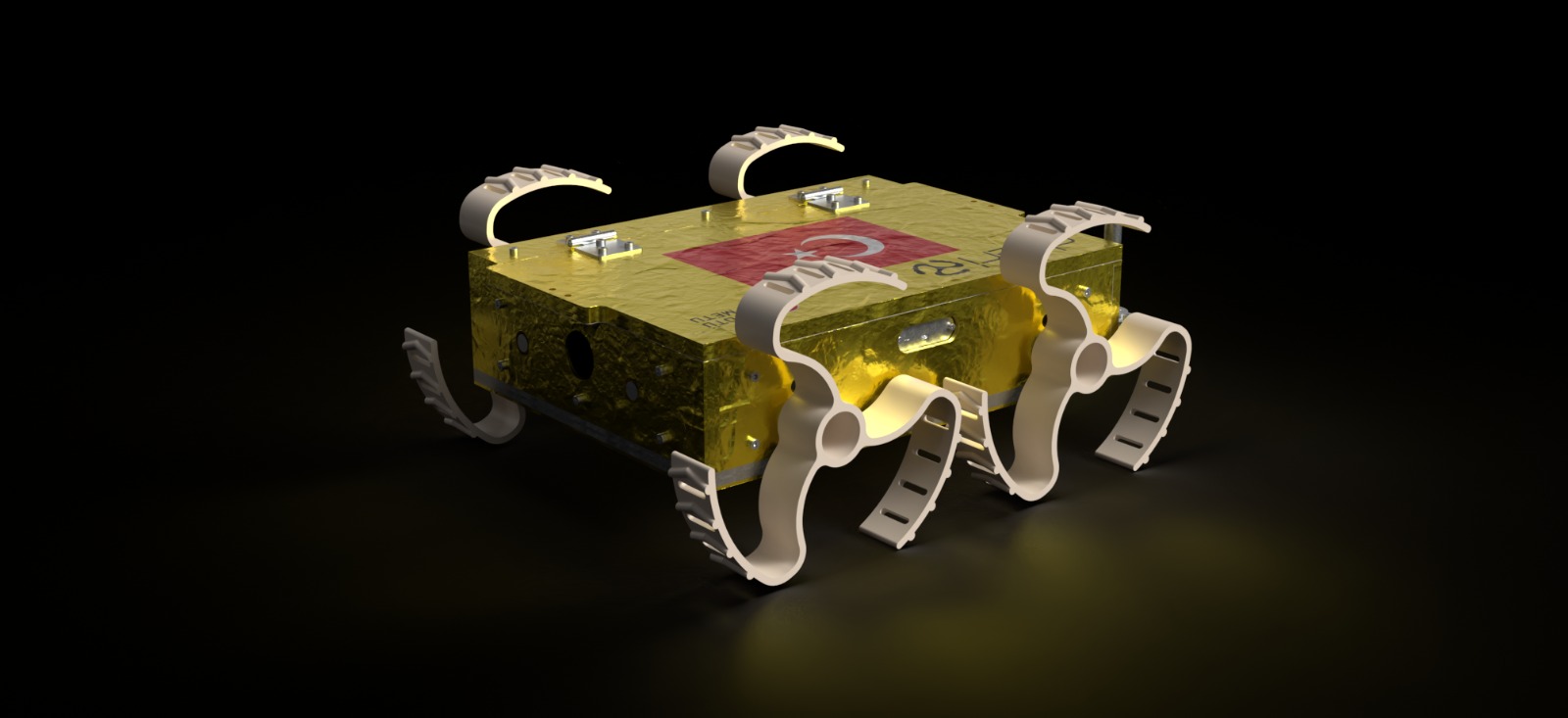
CHERI is a collaborative lunar exploration initiative conducted within the framework of the Chang'e-8 Mission. From Middle East Technical University, the project is developing two lightweight, cooperative micro rovers tasked with scientific operations on the lunar south pole, specifically the Leibniz Beta region, where sunlight rakes the horizon and shadows hold ice older than civilisation.
Two rovers, each below 5 kg, navigating side-by-side across regolith too rough for orthodox machines.
The rovers plan, perceive and decide on the lunar surface themselves, without waiting for ground-station commands from Earth.
Built to endure the full lunar cycle: 14 Earth-days of sunlight at +80 °C, followed by 14 Earth-days of darkness at −200 °C.
Inertial sensors fused with stereo vision and event cameras drive autonomous localisation across GPS-denied lunar terrain.
A decentralised, self-organising radio mesh keeps rover-to-rover and rover-to-lander links alive: fault-tolerant by construction.
Solar harvesting and battery scheduling balance traverse, science and survival modes across the long lunar duty cycle.
Multi-layer insulation, controlled heat paths and selective surfaces keep electronics within survival limits across the 14-day lunar day and 14-day lunar night.
Custom composite panels do triple duty: load-bearing structure, thermal insulation and UV shielding, keeping the rover beneath the 5 kg envelope.
Two rovers exchange perception and plans, splitting exploration tasks and recovering each other from hazards in real time.
On-board stereo cameras compute depth and motion at every step, while sparse feature tracking lets CHERI localise itself across an unmapped, GPS-denied lunar surface. The same pipeline is shown above in laboratory rehearsal.
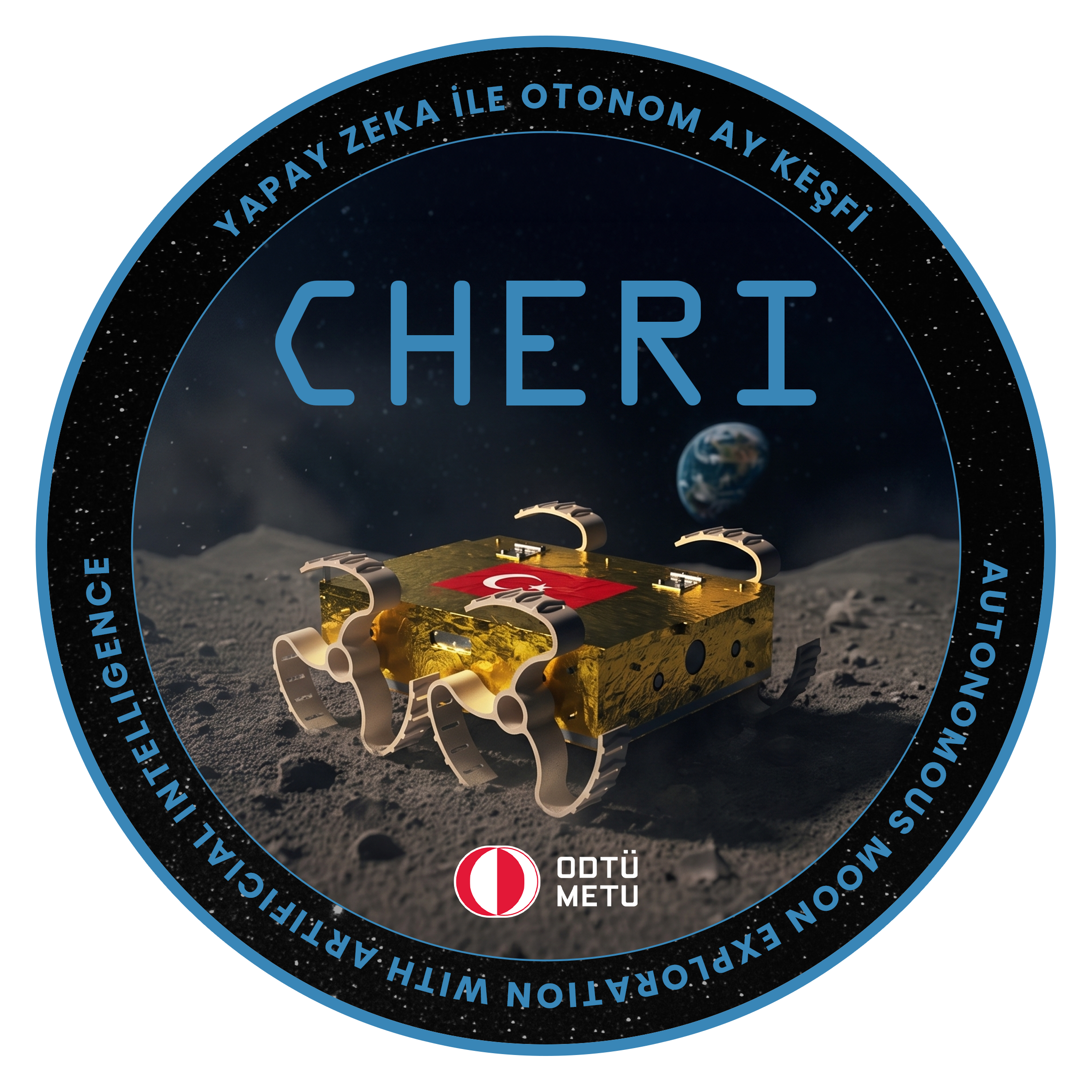
The first Turkish rover
on the Moon.
CHERI carries Türkiye to the lunar surface for the first time: designed, built and operated from Ankara, flying with the Chang'e‑8 mission.
A multidisciplinary group of engineers, students and researchers at Middle East Technical University.